
Industries
Porter Services for Colleges and Universities
Lecture hall corridors, residence hall lobbies, union seating and rec center locker rooms see their heaviest traffic in short bursts. Porters keep them stocked and clear between classes, meals and events, under your campus’s own key and access rules.
Build my porter planCall (408) 675-8012
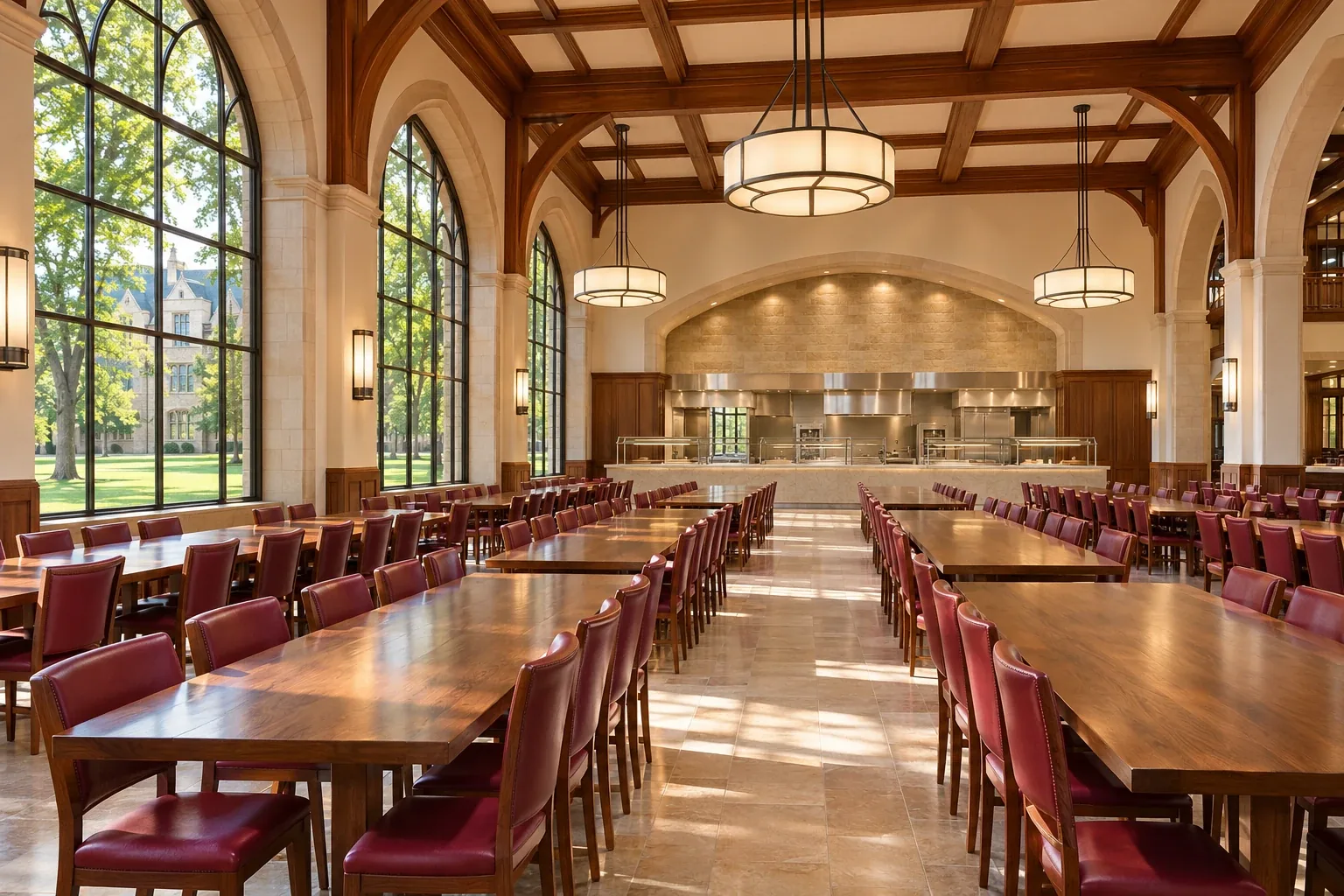
Porters for the buildings students fill every day
Dominion Porter Services puts day and night porters in campus buildings so restrooms stay stocked, lobbies stay clear and trash keeps moving between classes, meals and events. A porter plan is written for the people who run those buildings: facilities directors, custodial managers, housing and residence life teams, and the auxiliary services offices behind the union, dining commons and recreation center.
Porters work beside the campus’s own custodial staff rather than in place of them. The custodial crew handles the deep work on its cycle, and porters keep the busiest spaces presentable in between. Our guide to porters and janitorial working together shows how the two schedules split the day.
Porter rounds by campus building
| Building | What porters keep up | When rounds run |
|---|---|---|
| Lecture halls and classroom buildings | Corridor and entry bins emptied, restrooms restocked, spills dried, door handles, stair rails and elevator buttons wiped | Between class periods, when hallways empty out |
| Libraries | Entry glass, study-area bins, restrooms and drinking fountains | Through long study hours, with added rounds in finals week |
| Residence halls | Lobbies, lounges, hallway bins, shared bathrooms and trash rooms | Daily, plus extra hours on move-in and move-out days |
| Student unions and dining commons | Seating and tables cleared, waste stations sorted, restrooms and lounges reset | Around breakfast, lunch and dinner rushes |
| Recreation centers | Lobby, locker rooms, benches, restrooms and towel bins | Before the morning and evening workout peaks |
| Teaching lab buildings | Corridors, restrooms, break areas, trash and recycling, with lab rooms only as the lab’s protocol allows | Set with the lab manager |
| Administrative offices | Front desks, meeting rooms, staff kitchens and restrooms | Office hours |
| Plazas, walks and parking structures | Litter, exterior bins, garage stairwells and elevator lobbies | Early morning and after evening events |
Outdoor stops run on our exterior porter and parking garage porter routes, and union and residence hall waste moves through trash and recycling runs to the collection points the campus names.
Day porters while classes are in session
A day porter fixes problems while people are still in the building: the restroom that ran out of paper at 10 a.m., the spilled coffee in the union, the overflowing bin outside a lecture hall. APPA’s chapter on cleaning operations lists day, swing and late-night shifts as options and says the choice belongs with the people the building serves and the staff who clean it. Among the gains it lists for day cleaning are lower energy use and visible staff who can fix problems quickly.
APPA also notes the drawbacks: occupied rooms are harder to clean and noisy work can disturb people. That is why porter plans keep loud tasks out of class time. Day porters stay quiet and quick while lectures run, and night porters take the heavier resets once buildings close. APPA’s cleaning operations chapter covers the full staffing picture, and our day porter vs. night porter guide compares the two shifts.
Which office owns each building
A porter plan can cover one building or one department’s portfolio. On many campuses the student union, housing and dining run under a different office than the academic buildings, so each office can book porters for its own spaces.
One CSU campus, for example, says its central custodial service does not cover the student union, student housing, the bookstore, the cafeteria or foundation buildings. A housing director, union manager or recreation center lead can set up porter coverage for just those buildings, on that office’s own schedule and budget.
Your campus sets the standard
The campus decides what clean looks like, building by building. Porters work to the checklist and service level the facilities department or building owner sets, and our supervisors inspect each route against that same checklist.
Many campuses describe the result they want with APPA’s five custodial appearance levels. They run from Level 1, Orderly Spotlessness, a showpiece standard where floors are bright and restroom fixtures gleam, down to Level 5, Unkempt Neglect, where trash overflows and grime is widespread. APPA’s chapter says the right level should be set together with the people who use and clean a building. Porter rounds give a campus a way to hold its chosen level in the spaces that see the most traffic.
Porter hours across the academic year
Campus traffic follows the calendar, so porter hours do too. A plan can add hours in the weeks that strain a building and pull back during breaks:
- Start of term: residence hall lobbies and trash rooms fill with cardboard on move-in days, so porters break boxes down and carry them to the collection point through the day.
- Finals: libraries and unions stay busy late, and restroom and bin rounds run later with them.
- Move-out: hallways, lounges and trash rooms get extra passes while residents leave.
- Summer: conferences and camps bring new crowds to the halls and the rec center.
Summer housing work shows how this plays out. One CSU housing office readies its residence halls for summer conference programs, keeps common bathrooms, lounges, hallways and stairwells clean through the season, and keeps daily records of the rooms and public areas cleaned. Porters can cover the same common areas and log each round the same way.
Events in the union, arena and quad
Events need porters before, during and after. One Northern California private university’s event policy lists the moments extra custodial help is needed: a refresh before the event with restrooms recleaned and restocked and trash removed, service during it with trash patrols and restroom checks, heavy cleanup before the next day’s routine service, outside food vendors, and events after 5 p.m. or on weekends.
That policy asks hosts to book at least a week ahead and give the location, date, start and end times, headcount and food being served. Those same details size an event porter team for a commencement reception, a speaker night or a weekend tournament. The event custodial policy is a useful model for writing your own request form.
Campus keys and porter screening
The campus decides which keys a porter carries and which work calls for a background check. Every Dominion porter is background-checked before a first shift, and each route is built inside the campus’s own key and access rules.
Key rules can be strict. At one CSU campus, outside key requests must be approved by Facilities Management, keys issued to companies carry an expiration date, each holder gets one copy, and keys may never be lent or copied. A key not returned within one business day of a request counts as lost (contractor key request form). Porter routes are planned around the keys and cards the campus issues, and keys go back when the campus asks.
The CSU’s systemwide background check policy makes contractors responsible for checks on employees who do work the CSU considers sensitive. It also requires checks for anyone whose work brings regular contact with minors, including at campus-hosted recreational camps. That matters for summer porter hours in residence halls and rec centers (read HR 2017-17).
Restroom rounds, products and safety data
Restroom and touch-point rounds follow public health guidance: clean first, then disinfect. CDC’s facility guidance lists door handles, desks, stair rails, elevator buttons and restroom fixtures as high-touch surfaces to clean regularly. Where a disinfectant is used, it should be EPA-registered and stay wet on the surface for the label’s full contact time (CDC guidance). Our restroom checks run on that order, and the restroom check frequency guide helps set how often.
A porter working inside a campus building is a second employer on site. California’s hazard communication standard, 8 CCR 5194, requires the written program in a multi-employer workplace to say how each employer shares chemical hazard information, and Safety Data Sheets must be within reach on every shift (8 CCR 5194).
Product and waste rules come from the campus. As of November 2026, the University of California’s Policy on Sustainable Practices strongly prefers functional alternatives to harmful products and sets a goal of diverting 90% of municipal solid waste from landfill (UC policy). The policy names no cleaning products, so each campus’s purchasing and sustainability offices decide which ones porters use and which bins each waste stream goes into.
Campuses across our service area
Universities, state campuses and community colleges across Northern California and northern Nevada all need busy buildings kept presentable between classes.
We staff porters for campuses in and around Berkeley, Santa Clara, Sacramento, Stockton and Reno. University research parks with lab buildings have their own plan on our life-science campus page.
Get a campus porter plan
Campus porter coverage is billed by the porter-hour on a monthly plan. The number of buildings on the route, restroom counts, class-change and meal peaks, late library hours, event bookings and summer programs shape the schedule. The day porter pricing guide explains how hours add up.
A backup porter learns each route ahead of time, so a sick day never leaves a residence hall lobby uncovered. Dominion is insured, bonded and carries workers’ compensation, and each client receives a certificate of insurance for its vendor file. Request a free walkthrough of your buildings, and a written porter plan follows with hours, routes and tasks.
A few useful answers
Common questions
Can porters cover only the residence halls or the student union?
Yes. A plan can cover a single office’s buildings, such as housing, the union or the recreation center, on that office’s own schedule, while the academic buildings stay with the campus custodial team.
Will porters disrupt lectures or study time?
No. Day porters work corridors, restrooms and lobbies during passing periods and keep loud tasks for the night porter after buildings close.
How far ahead should we book porters for a campus event?
As soon as the date is set, and a week ahead works well. Send the location, date, start and end times, headcount and any food being served, and the team is sized from those details.
Do porters follow our campus’s appearance standard?
Yes. Rounds follow the checklist and service level your facilities department sets, including an APPA appearance level if the campus uses one, and supervisors inspect against it.
Can porters add hours for move-in and move-out?
Yes. Extra porters cover residence hall lobbies, hallways and trash rooms on those days, breaking down cardboard and clearing it before it piles up.