01 / Daytime
Day porter services
Staffed daytime coverage for lobbies, restrooms, breakrooms and common areas while the building is busy.
View details
Medical Office Buildings
Patients notice everything. Porters keep waiting areas, corridors, elevators and restrooms clean and stocked throughout clinic hours.
Build my porter planCall (408) 675-8012
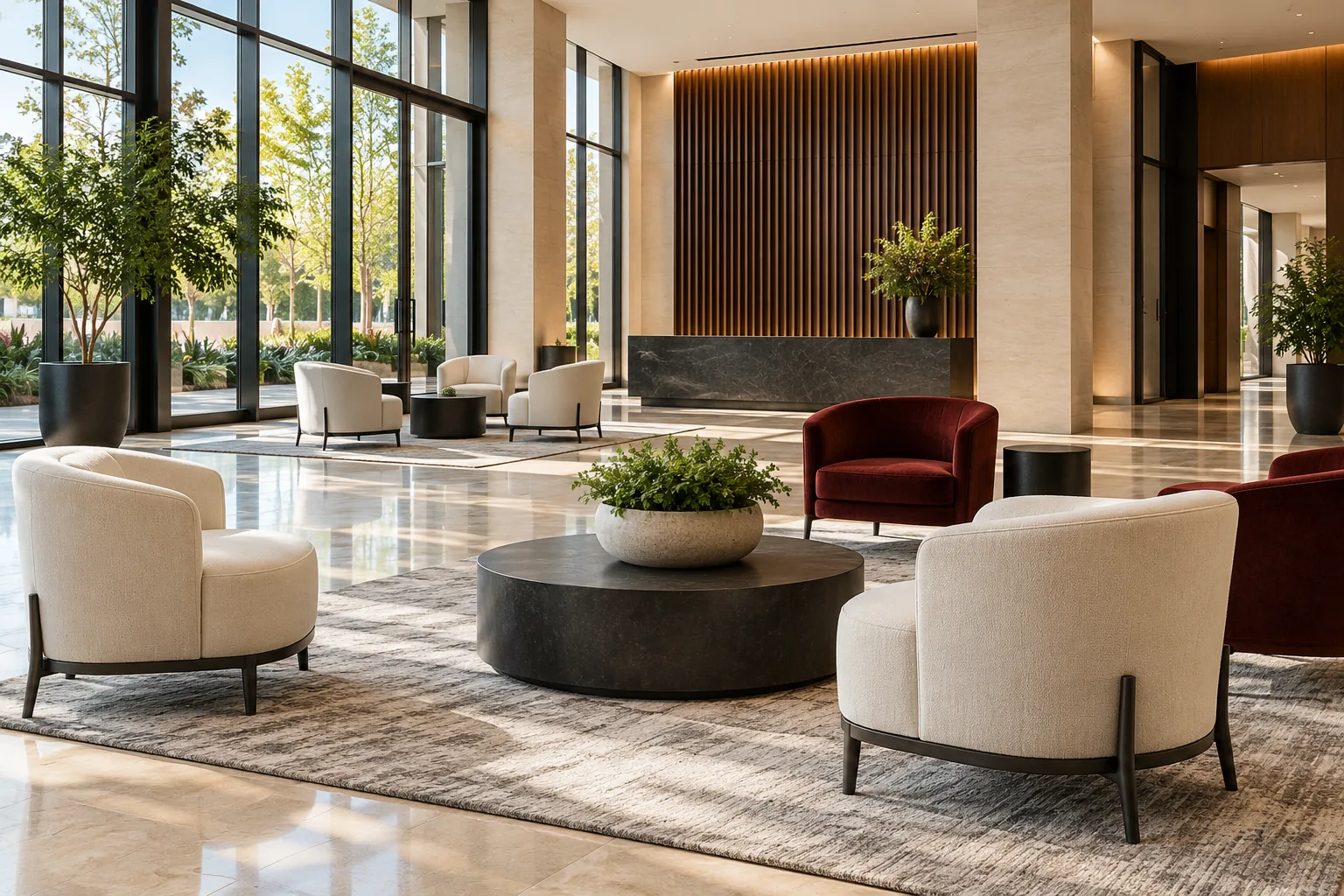
Clinic hours bring a steady stream of patients through the same lobby, elevators and restrooms. Porters keep waiting areas neat, restrooms stocked and elevator doors clean from the first appointment to the last, then night porters reset the entrances for the next day.
What we do
Pick the coverage you need. We’ll staff it and run it.
01 / Daytime
Staffed daytime coverage for lobbies, restrooms, breakrooms and common areas while the building is busy.
View details02 / Restrooms
Scheduled restroom rounds: cleaned, stocked and inspected throughout the day.
View details03 / Overnight
After-hours resets of lobbies, entries, amenity spaces and exteriors so the building opens fresh.
View detailsMedical buildings fill early. Patients arrive before the first appointments, and the lobby, elevators and restrooms take that load all at once. Porters start with a lobby and ground-floor restroom pass, then follow patient flow upward through the morning.
Midday brings a second wave as appointment blocks turn over. Afternoons stay steady until the last clinic closes. Through it all, the route keeps waiting areas neat, door handles and elevator buttons wiped, and restrooms stocked at every pass.
Patients sit in waiting areas long enough to notice everything: a pile of magazines, a smudged window, a full bin, a restroom out of soap. Porters handle those details on each pass, along with entrance glass and the drop-off area out front. The building looks cared for, and fewer complaints reach the property manager.
Shared corridors and elevators matter just as much, because patients use them to find the right suite. Clean, clear corridors make a multi-tenant medical building feel organized from the moment someone steps off the elevator.
Medical buildings serve patients from early check-ins to late appointments. Pair daytime coverage with restroom rounds timed to patient traffic and a night reset after the clinics close.
Buildings with urgent care or imaging tenants keep the lobby busy into the evening, so the day route stretches later and the night reset starts once the last patient leaves. Buildings with mostly morning clinics shift the heavier passes toward the first half of the day. The walkthrough sets that balance for your tenant mix.
Porter coverage reaches past the waiting room. Between appointment blocks, porters turn over exam and procedure rooms by the practice’s own protocol: the surfaces it lists, in the order it sets. When a room needs a terminal clean, book it and we fit it into the route.
Disinfectants are EPA-registered, and each one stays on the surface for its full label dwell time before it’s wiped. Porters on medical routes are background-checked and trained in bloodborne-pathogen safety. They keep to HIPAA-aware conduct as well, so charts, screens and patient records are never read or moved.
Medical office buildings put more work into each porter-hour than an ordinary office. More restrooms per floor, waiting rooms that fill at every appointment block and touch points such as door handles and elevator buttons all sit on the loop. That tends to put medical buildings in the upper half of each city’s porter band, which runs $34 to $47 an hour across our California markets on 2026 published market data.
Take a 60,000-square-foot medical office building in Elk Grove with primary care, imaging and a pharmacy. One porter from 7:30 a.m. to 4 p.m. on weekdays, with a half-hour break, works about 173 hours a month; at $40 an hour that comes to roughly $6,920. Patient restrooms by the lobby fill fastest between 8 and 11 a.m., so the route front-loads them. Evening clinics and specialty suites stretch the hours, and the walkthrough with your building engineer sets them floor by floor.
A few useful answers
Yes. We set the interval to match patient traffic.
Yes. Building waiting areas, corridors and elevators are part of the route.
Yes. Night resets cover entries, lobbies and restrooms.
Yes. Porters work quietly in short passes, picking up and wiping around seated patients without disrupting check-in.
Lobbies, waiting areas, corridors, elevators, restrooms, entrances and the drop-off zone, plus exam and procedure rooms turned over to the practice’s protocol between appointments.
Waiting areas are on every loop of the route, with extra passes during the morning check-in rush and the midday appointment turnover.
Industries
Resources