01 / Restrooms
Restroom checks and restocking
Scheduled restroom rounds: cleaned, stocked and inspected throughout the day.
View details
Guide
The answer depends on traffic, not a rule of thumb. Here’s how to set the interval.
Build my porter planCall (408) 675-8012
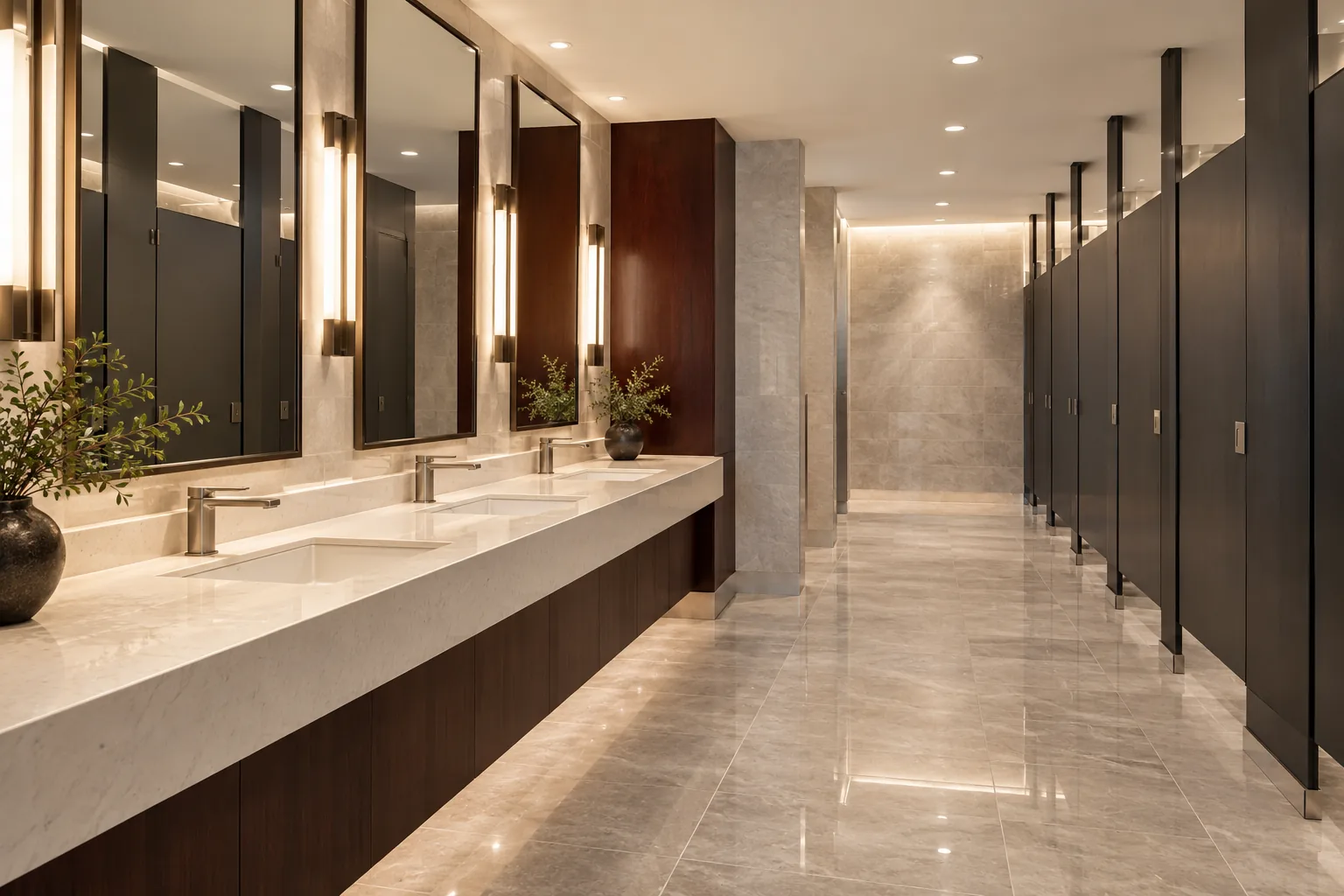
Tenants rarely call about a dusty ledge. They call about an empty soap dispenser or a restroom that looks rough by mid-morning. Restrooms are where building standards are judged.
Count roughly how many people use each restroom and when. Lobby-level restrooms, food court restrooms and restrooms near conference floors see the most use. Upper-floor restrooms in a quiet office building see far less.
In busy towers and retail centers, high-traffic restrooms need a check every hour or two during peak periods. Quieter office floors may need a check mid-morning and mid-afternoon. Industrial sites get checks right after each shift change, when everyone uses the restroom at once.
Traffic isn’t flat. An office building peaks in the morning, around lunch and at the end of the day. Tighten the interval around those times and relax it in between.
A check should be a full reset, not a glance: restock, wipe, empty and spot-clean. Porters should also report anything broken so it gets fixed before the next tenant notices.
Services
Pick the coverage you need. We’ll staff it and run it.
01 / Restrooms
Scheduled restroom rounds: cleaned, stocked and inspected throughout the day.
View details02 / Daytime
Staffed daytime coverage for lobbies, restrooms, breakrooms and common areas while the building is busy.
View detailsPicture a ground-floor restroom in a busy office tower. The first check lands before 8 a.m., so the room is stocked when arrivals peak. Another follows mid-morning, after the coffee wave. Around lunch, checks tighten to cover the hour when the food court and meeting rooms let out. The afternoon settles to a slower interval, and a final restock comes before the evening exodus.
An upper-floor restroom in the same tower gets fewer visits on its own lighter schedule. Writing the two schedules separately keeps porter time where the traffic is.
Most restroom complaints are really supply complaints. Dispensers filled to the brim at 7 a.m. still run dry at 12:30 when the lunch rush is heavy. Set the restock point to the busiest hour: the porter tops off paper, soap and seat covers before each peak, not after someone finds a dispenser empty.
Keep backup supplies close. A stocked closet or cart on each floor saves a trip to the basement and keeps every check short.
The restroom tells you when the schedule is wrong. Watch for the same patterns over a week, then tighten or relax the interval around the hours where they show up.
A few useful answers
Yes. A sign-off sheet on the door shows tenants the room is on a schedule and helps you see which hours run short.
Just before the first arrivals. Starting stocked means the morning peak never catches the room short.
Yes. Even a low-traffic restroom needs a mid-morning and a mid-afternoon visit so supplies and touch points stay right.