
Industries
Porter Services for Semiconductor and Electronics Plants
Your cleanroom runs on its own staff and protocol. Porters look after the building around it: lobbies, offices, break rooms, restrooms, corridors and the receiving dock, kept clean and clear for every shift.
Build my porter planCall (408) 675-8012
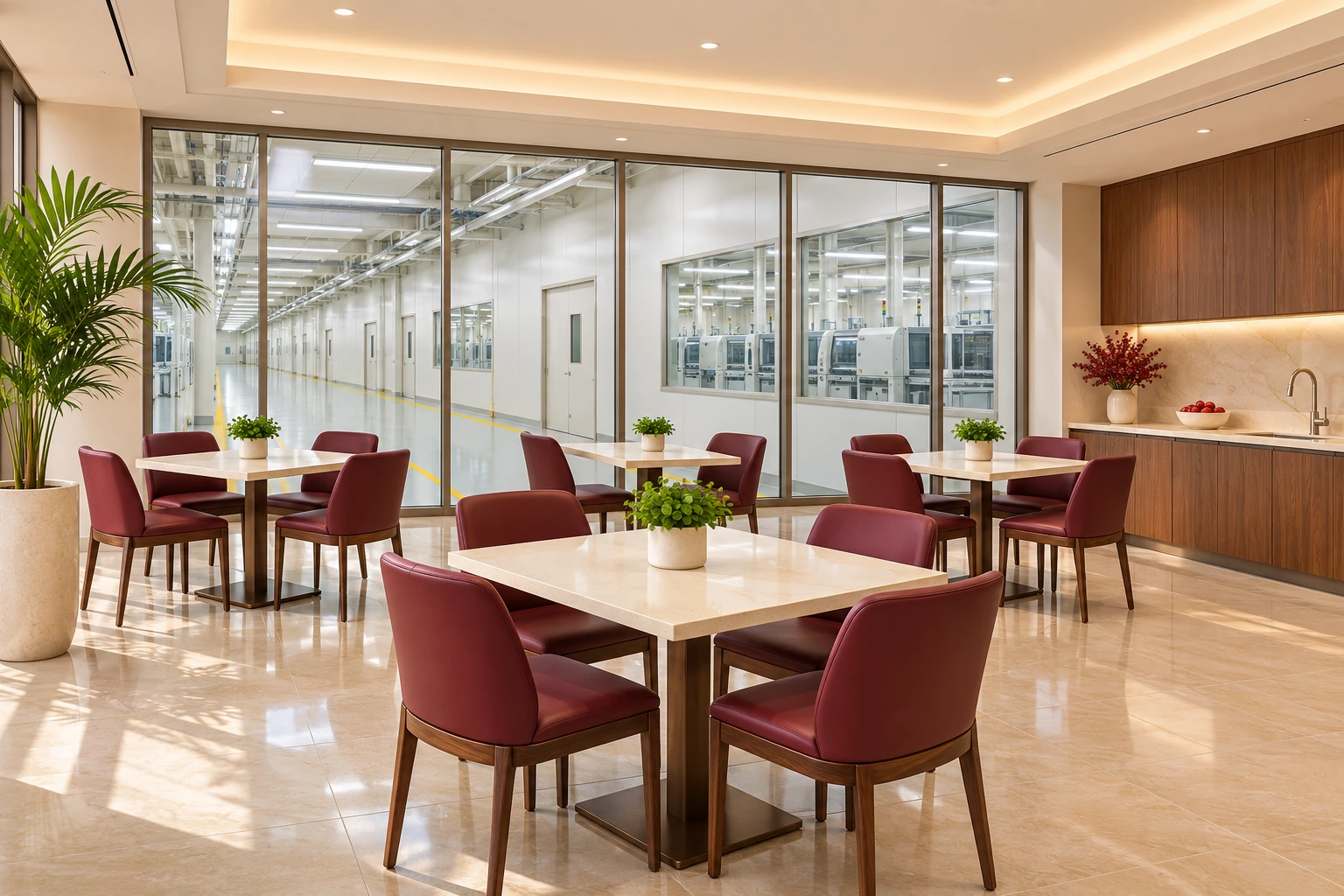
Porters for the building around the cleanroom
A semiconductor fab or electronics plant puts its tightest controls on the cleanroom, yet most of the people in the building spend much of their day outside it. They pass through the lobby, work in offices and conference rooms, eat in the break room and change shifts in the restrooms and locker rooms. Dominion Porter Services staffs day and night porters for those spaces, from the security entry to the receiving dock.
The plan is written for facility, operations, maintenance and EHS managers. The cleanroom, its gowning rooms and its pass-throughs stay with your cleanroom staff and protocol, and the porter route ends at the gowning room door. Everything a porter does on the support side follows the site’s access and safety rules, as your facility sets them.
Silicon Valley’s fab and electronics base
Fabs and electronics plants run on shift schedules, and the lobbies, break rooms and docks around their cleanrooms keep the same hours.
We staff porters for fabs, electronics assembly plants and university nanofabrication buildings throughout the South Bay and East Bay, in Sunnyvale, Santa Clara, San Jose, Mountain View, Fremont and Livermore.
What porters cover in a fab or electronics plant
| Area | Porter work | Timing |
|---|---|---|
| Lobby, security entry and visitor check-in | Glass and door pulls wiped, entry mats cleaned, floors kept dry, trash removed | Ahead of each shift arrival and through visitor hours |
| Offices, conference and meeting rooms | Desks and tables wiped, bins emptied, floors vacuumed | A daytime loop through office hours |
| Break rooms and cafés | Tables, counters, sinks and appliances wiped; compost, recycling and trash bins emptied | After each meal break and shift change |
| Restrooms and street-side locker rooms | Fixtures cleaned, dispensers filled, benches wiped, floors dried | Before and after each shift turnover |
| Corridors and stairwells outside the controlled zone | Floors swept and spot-mopped, handrails and touch points wiped | Every pass |
| Receiving dock and unboxing areas | Cardboard broken down, foam and wrap bagged, everything hauled to recycling | Around receiving hours |
| Parking lots and entries | Litter picked up, exterior bins emptied | An exterior loop once or twice a shift |
Every row is one of our existing services: day porter services, restroom checks and restocking, trash and recycling runs and the loading dock porter. Lab buildings with shared benches have their own approach on our life-science campus page.
Keeping grit out of the gowning entrance
Fab entry sequences start with a shoe-brush vacuum and a tacky mat before any gowning. Porters work the step before that: building entrances, entry mats and corridors kept clean, so less street grit travels toward the gowning entrance.
Packing waste kept away from the pass-through
Published protocols are strict about what never enters a cleanroom. They bar regular paper, cardboard, Styrofoam, bubble wrap, paper towels and tape unless the fab manager approves an exception, and some keep paper and cardboard out of the gowning area too. Each facility writes its own list.
That makes receiving one of the porter’s most useful stops. Boxes are broken down at the dock, foam and wrap are bagged, and all of it goes to your recycling area through the day, so none of it stacks up near a pass-through or the gowning room door.
Static-sensitive areas on the porter’s map
The ESD Association describes electrostatic discharge as a rapid transfer of static charge, usually a spark between two objects at different potentials. Its table shows a person walking across vinyl tile can build about 12,000 volts at 10-25% relative humidity. ESD damage can also be latent: a part keeps working but may fail early.
An ESD protected area is any place where static-sensitive items are handled, and ESDA notes facilities often have more of them than they expect. It also says insulative footwear, casters and wheels should be kept away where exposed sensitive items are handled, because they block the path to ground. Facilities often mark them with floor tape.
Your ESD program decides where porters go. The walkthrough marks every protected area your facility names on the porter’s route map, and porter carts stay out of them unless your team clears the stop and sets the gear it requires.
Shift changes, break rooms and the dock schedule
One published fab protocol bans eating, drinking and gum in cleanroom and clean areas, and where a site works that way, the break room carries every meal and coffee break for the shift. Porters time break room and restroom rounds to your shift changes, keep the dock clear around receiving hours, and a night porter resets the support side before the morning crew. Plants that run like a factory floor share the shift-change rounds on our manufacturing and warehouse page.
Each porter passes a background check before the first shift, and supervisors inspect the support-side route against your checklist. A backup porter learns your access and ESD markings ahead of time, so a sick day never leaves the lobby uncovered. Dominion holds insurance and bonding, carries workers’ compensation, and supplies a certificate of insurance before work begins.
Get a fab or electronics plant porter quote
Porter coverage is billed by the porter-hour on a monthly plan. Shifts covered, break rooms and restrooms, dock volume and the escort or access steps your site sets shape the hours. The day porter pricing guide lays out how weekly hours become a monthly total. Book a free walkthrough of the support side and we’ll put the hours, routes, tasks and price in a written porter plan.
A few useful answers
Common questions
Do porters work inside the cleanroom or gowning room?
The route ends at the gowning room door. The cleanroom, its gowning rooms and its pass-throughs stay with your cleanroom staff on your protocol, while porters cover the rest of the building.
Who handles cardboard and foam from incoming shipments?
Porters break boxes down at the dock, bag foam and wrap, and take it all to your recycling area through the day, well away from the pass-through.
How do porters treat areas marked for static control?
Every protected area your facility names goes on the route map, and porter carts stay out unless your team clears the stop and sets the gear it requires.
Can break room and restroom rounds follow our shift changes?
Yes. Rounds land right after each shift turns over, and a night porter resets the support side before the next morning.
Do you staff porters for electronics plants in the South Bay and East Bay?
Yes. Routes cover Sunnyvale, Santa Clara, San Jose, Mountain View, Fremont, Livermore and the cities around them.