
Industries
Porter Services for Airports
Terminal restrooms, gate seating, airport offices and the curb never get a quiet day. Porters keep them clean, stocked and free of loose trash through the flight schedule, under the airport operator’s access rules.
Build my porter planCall (408) 675-8012
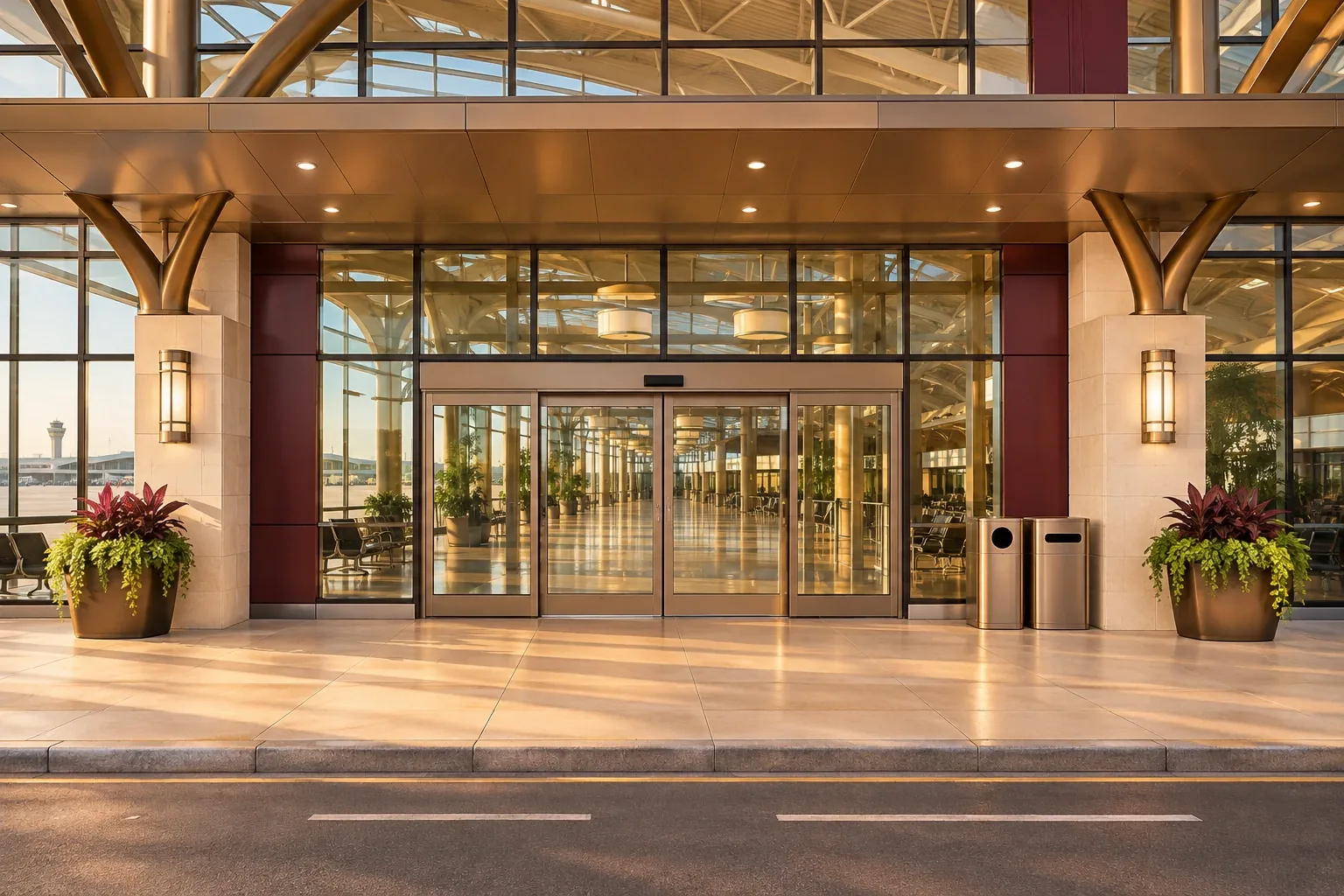
Porters for terminals, concourses and airport buildings
An airport terminal fills and empties with every bank of flights, and its restrooms, gate areas and baggage claim carry the strain. Dominion Porter Services staffs day and night porters for passenger terminals, concourses, airport offices, and cargo and support buildings. Restrooms stay stocked, seating stays clear and trash keeps moving from the first departure to the last arrival.
The plan is written for the facility, operations and terminal managers who run these buildings, and for tenants who manage their own leased space. The airport operator decides where any contractor may work and when, and every porter route is built inside those rules.
Airport routes across our service areas
We staff airport routes from South San Francisco and San Jose to Oakland, Sacramento, Stockton, Santa Rosa and Reno.
What porters cover across an airport campus
| Area | Porter work | Timing |
|---|---|---|
| Terminal restrooms | Fixtures cleaned, paper and soap refilled, floors kept dry, accessible stalls kept open | Rounds tightened through each departure and arrival peak |
| Ticket lobbies, gate seating and baggage claim | Bins emptied, seating and counters wiped, spills dried, glass and touch points cleaned | Continuous loops while flights board and land |
| Airport offices and operations rooms | Trash, surfaces, break rooms and restrooms | Office hours and shift handovers |
| Cargo and support buildings | Break rooms, restrooms, dock litter and cardboard | Around freight and maintenance shifts |
| Curbside, garages and surface lots | Litter picked up, exterior bins and ash urns emptied, garage stairwells and elevator lobbies cleaned | Exterior loops through the day |
| Service animal relief areas | Cleaned and restocked | On the schedule the airport sets |
Each row uses a porter service we already run: day porter services for the terminal floor, restroom checks and restocking, and the parking garage and loading dock porter for garages and docks. Airports with 10,000 or more annual enplanements must offer at least one wheelchair-accessible service animal relief area in each terminal, usually past the checkpoint, so that stop goes on the route wherever the airport assigns it.
Who decides where a porter may go
TSA’s airport security rule, 49 CFR part 1542, governs airports that serve aircraft operators with TSA security programs. Each airport’s own security program draws the lines for its secured area, its security identification display area (SIDA), its air operations area (AOA) and its sterile area, so the boundaries differ from one airport to the next.
A tenant can run a TSA-approved tenant security program for its own leased space, though never for the passenger terminal as a whole. So a porter working an airline club or a concession space follows the tenant’s rules and the airport’s rules together. Read 49 CFR part 1542.
Badges, escorts and what the rules ask of any contractor
Before anyone gets unescorted access to a SIDA, the airport operator must confirm a fingerprint-based criminal history records check, after verifying two forms of ID. The person must also complete training on a TSA-approved curriculum covering badge display, escort and challenge procedures and security duties. Inside the secured area or SIDA, everyone shows airport ID on the outermost garment above the waist, or stays under escort.
Only badge holders with unescorted access may escort, and the person escorted must be accompanied or watched closely enough to tell if they stray from the purpose of the visit. On escorted stops, the porter stays in the escort’s sight the whole time and never props an access-controlled door.
The porter plan follows whatever the airport’s process allows. Stops on the public side of the checkpoint start on day one. Stops past it are added once the airport has cleared the porter through its own badging, or has set an escort for them.
Trash that never reaches the ramp
Foreign object debris, or FOD, is the FAA’s term for anything out of place on an airfield that could hurt people or damage aircraft, and each airport operator sets its own FOD measures. The FAA’s advisory circular on FOD guides them. It names paper, plastic, soda cans, pens, badges, luggage tags and catering supplies as typical FOD, and it warns that wind lifts light trash onto the airfield.
The circular says everyone with AOA access should understand their part in FOD prevention, cabin cleaning and waste crews and other contractors included, and it lists clean-as-you-go habits as a training topic. Porters work that way: liners tied before they move, lids closed on every bin, and curbside and lot litter picked up on each loop.
Where a porter works airside, waste is covered and secured before it moves, FOD containers are secured in high wind, and debris in the movement area is reported to airside operations, never chased.
Accessible restrooms and routes kept usable
The ADA rules for public entities and public accommodations require accessible features to be kept in working order, while allowing brief interruptions for maintenance. Porters plan restroom rounds so an accessible stall and a dry route stay open while the rest of the room is cleaned, and dispensers in accessible stalls are refilled on the same pass.
Rounds timed to the flight schedule
Terminal traffic comes in waves, so porter hours follow the departure and arrival banks rather than a flat shift. A day porter works the gate areas and restrooms through the morning push, a second porter can join for the afternoon bank, and a night porter resets lobbies and restrooms once the last arrivals clear. Terminals that open before dawn get a restroom and lobby round ahead of the first departures.
Background checks are done on each porter before day one, and our supervisors inspect the terminal route on a regular schedule. Backup porters learn the terminal stops in advance, so a sick day doesn’t leave a concourse uncovered. Dominion’s coverage includes insurance, bonding and workers’ compensation, with a certificate of insurance sent for your contractor file.
Get an airport porter quote
Airport porter coverage is billed by the porter-hour on a monthly plan. Restroom count, flight-bank peaks, overnight hours, garage and curbside loops, and the escort steps your airport sets shape the schedule. The day porter pricing guide explains how the hours add up, and how often to check restrooms helps size the rounds. Request a free walkthrough of the terminal, and a written porter plan follows with the hours, routes, tasks and price.
A few useful answers
Common questions
Who issues the badge a porter needs past the checkpoint?
The airport operator, through its own badging process and its TSA-approved security program. It also decides who may escort a porter in the meantime.
Can porters stay on the concourse through the morning departure rush?
Yes. Porter hours are set around your flight banks, so restrooms and gate seating get the most attention while passengers board.
How do porters keep terminal trash off the airfield?
Liners are tied before they move, lids stay closed and curbside and lot litter is picked up on every loop, so wind has nothing loose to carry.
Can the parking garage and curbside share a plan with the terminal?
Yes. Garage stairwells, elevator lobbies, curbside bins and surface lots can sit on the same porter plan as the terminal floor.
Can a tenant hire porters for its own leased space?
Yes. The route follows the tenant’s rules for its lease area along with the airport’s access rules for getting there.