
Industries
Porter Services for Ghost Kitchens and Cloud Kitchens
Delivery-only kitchens cook for several brands from breakfast to late night. Porters keep pickup lobbies, packaging stations, walk-ins and floors clean between rushes, then reset the kitchen overnight.
Build my porter planCall (408) 675-8012
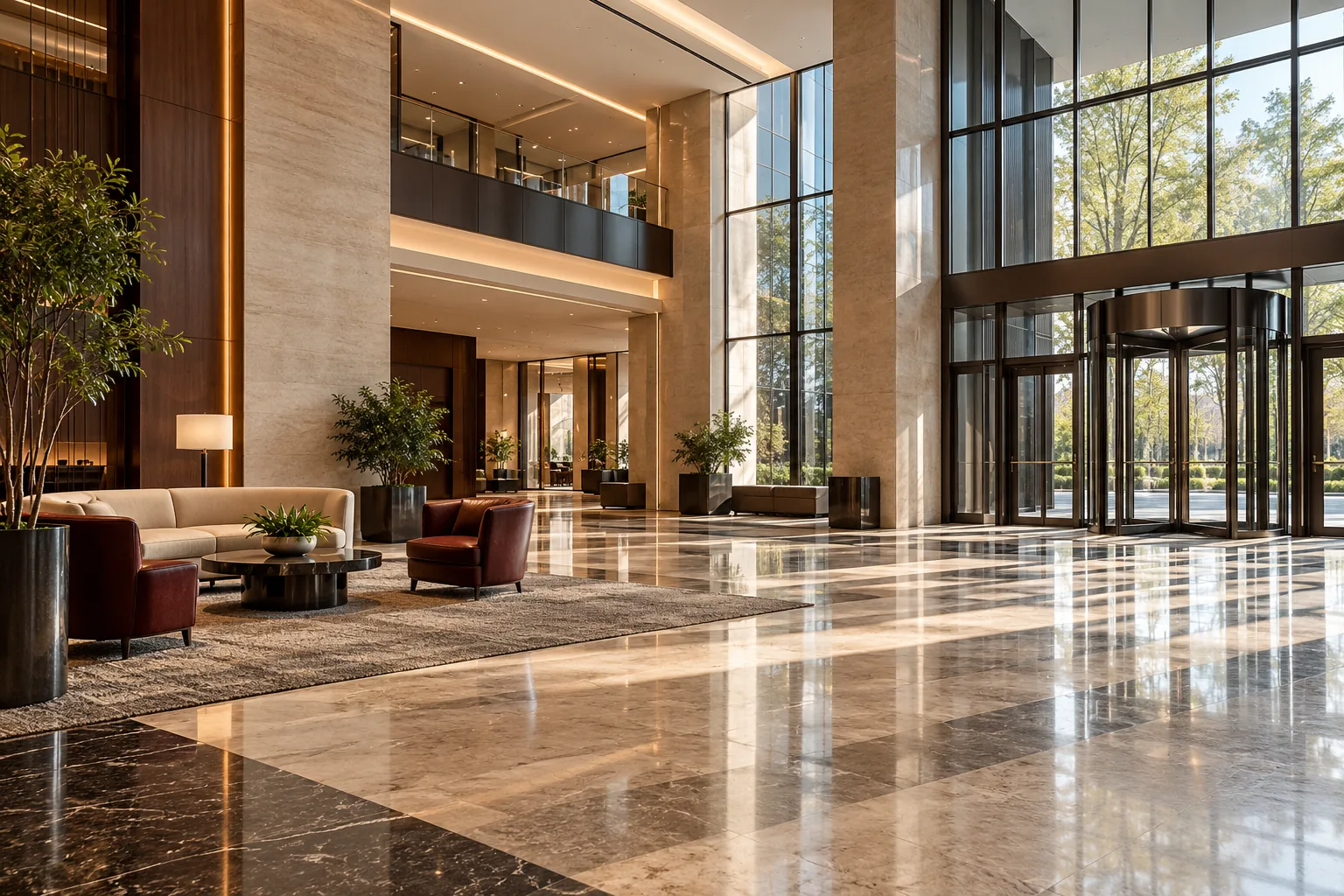
Delivery-only kitchens never really close.
A ghost kitchen sends out food under several brand names from one building, often from breakfast through late night. Orders are cooked, packed and handed to drivers in minutes, and the building takes a steady beating from cooks, couriers and cardboard. Dominion Porter Services offers porters for delivery-only kitchens across the Bay Area and the Sacramento region.
A single delivery building can hold many brands and a shared pickup counter under one roof.
Pickup lobbies and driver shelves.
The pickup area is the only part of a ghost kitchen most people ever see, and it carries more foot traffic than the kitchens behind it. Porters keep pickup shelves and cubbies wiped, the counter clean, sauce drips and drink rings gone, the floor dry and the bin by the door emptied before it overflows.
Driver waiting areas and entry doors get the same treatment, along with the sidewalk and curb where couriers stop. Our exterior porter route picks up litter, wipes entry glass and keeps the curb zone presentable for neighbors.
Packaging stations and high-volume areas.
Each brand packs dozens of orders an hour, and packaging stations end every rush buried in lids, receipt paper, napkins and splashes. Porters clear and wipe expo counters, heat shelves, label printers and bagging tables between waves, so orders keep moving without cooks stopping to clean.
Flattened cardboard, film wrap and food waste come out in a steady stream. Porters break down boxes, haul recycling and compost, and keep the dumpster area swept, working with our trash and recycling runs around the site’s collection days.
Tight turnovers between shifts.
Morning and evening teams often belong to different brands that share a corridor or a prep area. A short, scheduled turnover between them resets common prep surfaces, hand sinks, corridors and restrooms, so the incoming crew starts clean instead of inheriting the last rush.
Cold storage gets its own pass. Walk-in floors are swept and mopped, door handles and gaskets wiped, shelves and rolling racks cleaned, and spills taken care of the moment they are spotted.
Overnight resets.
Late-night orders keep the line busy until the small hours, so the deep reset happens after the last order. Night porters wipe the walls and stainless surfaces around the line, scrub floors, flush floor drains and wash mats, then leave the building reset before the breakfast brands arrive.
Restrooms, the staff break area and lockers are cleaned and restocked on the same overnight visit, so the day opens with soap, towels and paper ready.
Shared kitchens and delivery kitchens.
Commissaries and incubator kitchens rent stations to many small businesses on a booking calendar, while a ghost kitchen runs several delivery brands at full speed with couriers in and out all day. Both need a porter on the floor, but the routes differ. If your building is a commissary or shared-use kitchen, see our shared commercial kitchen page.
Every porter is background-checked before a first shift, supervisors walk the site on quality inspections, and each operator receives a certificate of insurance for its landlord or platform.
A route drawn around your building.
Every delivery building splits its kitchens, corridors and cold storage differently, so the route starts from how yours is laid out. We map which kitchens share corridors, prep sinks or cold storage, where the cardboard collects and which hours the building is truly quiet. Brand turnover times, the landlord’s waste schedule and any rules about porters entering a tenant’s kitchen all go into a written route.
From there, passes go wherever the mess actually lands, such as an extra pickup-lobby sweep at 7 p.m. or an earlier dock run before the morning delivery truck. Operators can ask for changes as brands are added, menus shift or late-night hours grow. Our night porter shift picks up the overnight work once the daytime plan is set.
What sets the price.
Ghost kitchen coverage is built from porter-hours. The number of kitchens and brands, operating hours, peak order windows, pickup area size, how many overnight resets you book and waste volume set the monthly plan. Our porter pricing guide shows how hours turn into a monthly figure.
A few useful answers
Common questions.
Can porters work during the lunch and dinner rush?
Yes. Porters work the pickup area, packaging stations and corridors in short passes between order waves without slowing the line.
Do you clean driver pickup shelves and lobbies?
Yes. Shelves, counters, floors, doors and the curb area are on every route, because couriers and customers see them first.
When does the deep cleaning happen in a delivery kitchen?
Overnight, after the last orders go out. Night porters scrub floors, flush drains, wipe down the stainless and reset restrooms before the morning brands arrive.
How is a ghost kitchen different from a shared commercial kitchen?
A ghost kitchen runs several delivery brands at full speed with constant courier traffic. A shared kitchen rents stations to many businesses on a booking calendar, so its route centers on tenant handoffs.
Will the same porter work our building every day?
Yes. A regular porter learns your brands, pickup layout and waste schedule. When that porter takes a sick day or vacation, a backup porter covers the shift, so the pickup area and packaging stations always have a porter.