01 / Garages
Parking garage and loading dock porter
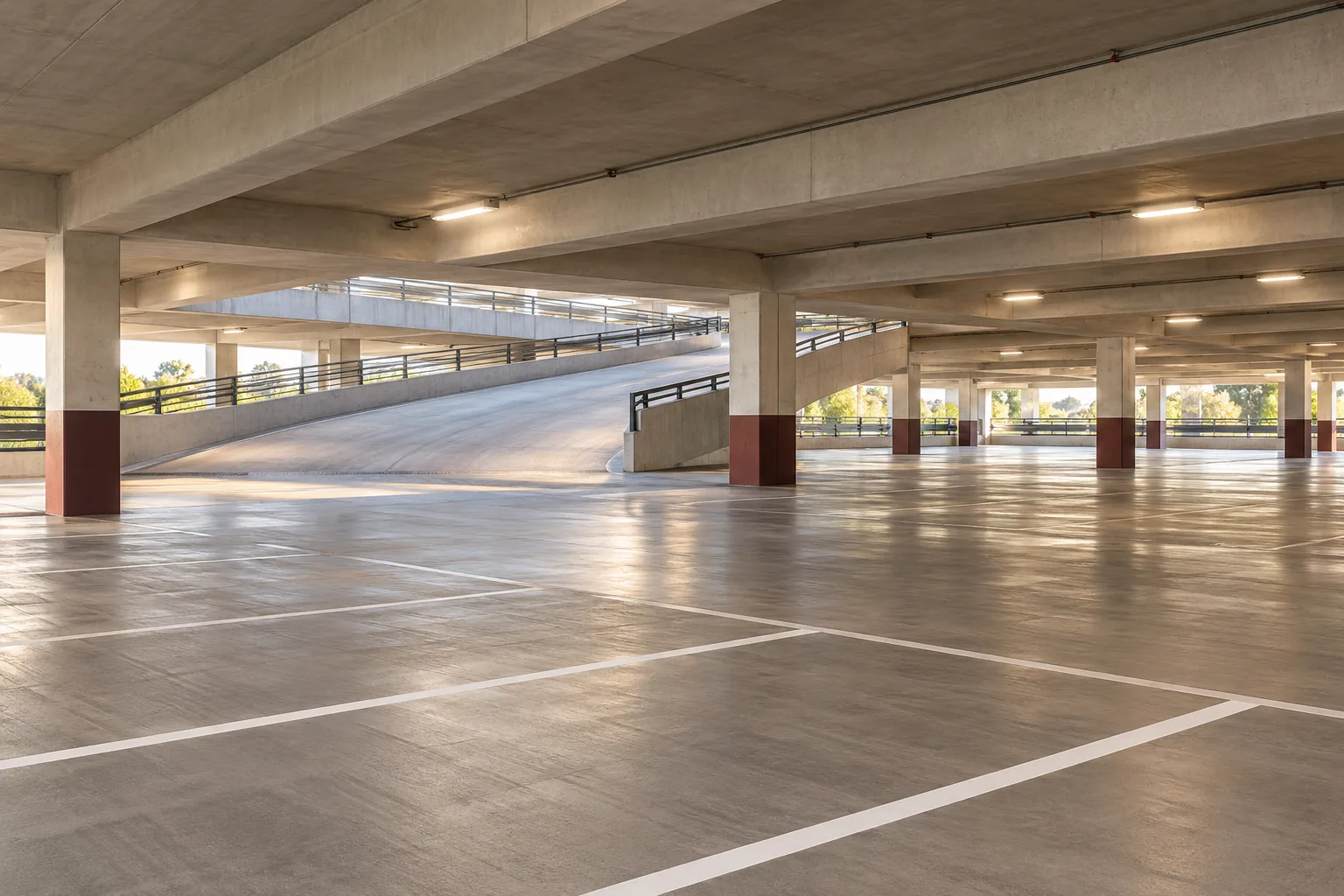
Garage levels, stairwells, elevators and loading docks kept clean and clear.
View details
Guide
Garages and docks are the first part of the building many tenants see. Here’s what to keep on the list.
Build my porter planCall (408) 675-8012
Printable checklist
For tenants who drive, the garage is the real front door. A stairwell with litter or an elevator lobby with grimy doors sets the tone before they ever reach the lobby.
Litter collects in predictable places: the corners of each level, around the pay stations and at the foot of every ramp. Enclosed stairwells and elevator lobbies are where tenants notice it most, so landings, handrails, elevator doors and call buttons belong on every pass. A busy office garage gets a daily pass with extra time on the main entry level, and we set the exact frequency after walking the property.
Services
Pick the coverage you need. We’ll staff it and run it.
01 / Garages
Garage levels, stairwells, elevators and loading docks kept clean and clear.
View details02 / Exterior
Litter pickup, entry walks, dumpster enclosures and compactor areas kept clean outside.
View detailsThe entry level takes the most traffic and deserves the most attention. Pay stations, ticket machines and gate arms collect receipts, cups and gum. Porters clear litter around them, wipe machine faces and buttons, and sweep the drive lane at the entrance where debris blows in from the street.
Signage counts here too. Wiping level signs and elevator directionals on the entry level takes a few minutes and changes how the whole garage reads.
Garage floors show oil drips, coolant puddles and spilled drinks. Fresh spills get absorbent and a sweep on the pass that finds them, before tires spread them across the level. Repeat drips in the same stall usually point to one vehicle, so porters note the stall for property management to follow up.
Anything that looks like a building problem, such as water coming through a ceiling joint or a pooling drain, gets reported the same day rather than cleaned around.
A clear dock keeps receiving moving. Between trailers, porters sweep each door’s apron, pick up banding and stretch film, and move broken pallets to the staging spot. Cardboard goes to the baler or compactor instead of stacking against the wall, and the area around dock levelers is cleared so nothing rolls under a wheel.
Our parking garage and loading dock porter service times those passes around your receiving windows.
Map the garage from the top level down, finishing at the entry so the most visible area is the last thing the porter touches before tenants arrive. Docks fit between receiving windows. Exterior lots and dumpster enclosures pair naturally with the garage, and exterior porter coverage shares the same loop. The printable checklist above runs in the same top-down order and closes with the questions worth settling before you set the route.
A few useful answers
Every pass. Stairwells are enclosed, used by every tenant who parks, and the first place litter and odors build up.
Passes fit between trailers or after a receiving window, so porters stay clear of forklifts and moving freight.
The porter who finds it. Fresh spills are absorbed and swept on the spot, and repeat leaks go to property management.
Yes. Drivers move between them, so working both on one pass keeps the whole path from car to building consistent.
Litter in corners and stairwells, grimy elevator call buttons and a dirty entry lane. Those three get attention on every pass.